




Marketing is about ensuring people can find your business when they need it.
Traditionally, this has been an area where search engine optimisation (SEO) has delivered, helping businesses improve visibility in Google and other search platforms.
However, the rise of artificial intelligence (AI) and large language models (LLMs) has reshaped how consumers discover information.
Generative engine optimisation (GEO) builds on the principles of SEO, focusing on how content is surfaced in AI-powered search environments, including chatbots such as ChatGPT and AI-generated summaries such as Google AI Overviews.
Speaking at the Better Business Summit 2026, digital marketing trainer Russ Easther notes these searches are often resolved at the point of query, with users receiving answers within results or AI-generated summaries, rather than clicking to a website.
“If the answer is being addressed in the search, it’s really hard to know whether the client’s brand is addressed in that question,” he says.
“It is one of the key challenges of working in the industry right now.”

Clear positioning
Not unlike SEO, Easther says a strong GEO strategy relies on clearly defining
who you serve, where you operate and your specific areas of expertise.
He encourages brokers to maintain consistent messaging across their homepage and profiles, including their Google Business Profile and LinkedIn, and recommends developing content such as guides and case studies that address common questions.
Third-party validation is another lever, including mentions and coverage in industry publications and listings in directories LLMs draw on.
As with SEO, the cumulative impact is often greater than the sum of their parts.
“It’s a lot of little things that stack, and then that usually creates a big outcome. I’ve seen that work for my clients, and I have personally seen that work for my own business,” he says.
“It might look daunting. But if we just break it down into little steps, and every day we take little baby steps, that’s how we achieve it.”
Targeted opportunities
Part of the reason now is an opportune time to pursue a targeted marketing strategy is the way opportunities are shifting across Australia’s property markets.
Adam Brown, NAB executive for broker distribution, says property markets around the country continue to perform relatively well, although price growth momentum has slowed in some markets as Australians navigate a fast-changing global economy and cost of living pressures.
Home prices across Australia’s combined capital cities rose 9.8 per cent over the year to April, according to NAB Economics’ Monthly Housing Monitor, led by the mid-sized capitals, particularly Perth and Brisbane, while Sydney and Melbourne recorded slight declines.
“Overall, markets are active and housing demand continues to outpace new supply. Net additions to Australia’s housing remain well below the 2015 peak,” Brown says.
“Ongoing supply bottlenecks, combined with population growth and tight rental conditions, are expected to continue to shape Australia’s housing markets.”
While global geopolitical events, cost-of-living pressures and higher interest rates are creating uncertainty, he says households remain in relatively good shape amid strong balance sheets, healthy savings and low unemployment.
“From first-home buyers to investors, each customer has their own priorities – and the property market in each state and city has its own local nuances,” Brown adds.
“To help customers achieve great outcomes, brokers need to build strong relationships with customers and have a strong understanding of the property market in their local area.”
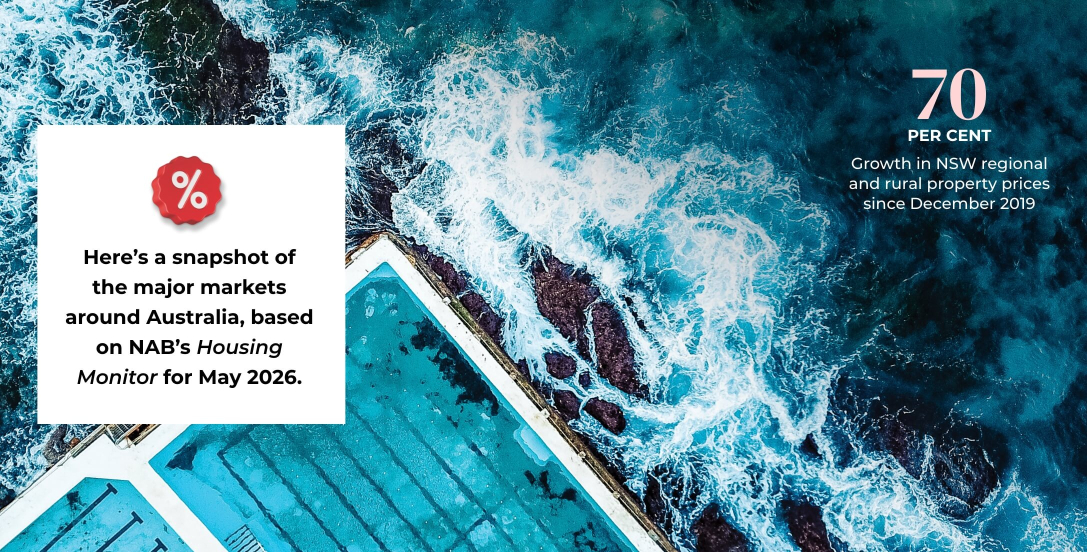
New South Wales
The market in NSW has flattened off after several years of strong growth. Since December 2019, Sydney home prices have risen by around 39 per cent, and in NSW regional and rural areas, prices are up 70 per cent.
With affordability in greater focus, prices in Sydney fell by 0.6 per cent in April, with momentum now slowing more noticeably across the market.
Homes are also selling more slowly, spending an average of 32 days on market, above the national average.
The picture is not consistent across all property types. Home values in Sydney’s upper quartile properties fell 1.8 per cent through the March quarter, while lower quartile values are 1.8 per cent higher, according to Cotality.
Momentum is also easing on the investor side. Advertised rents increased by 6.1 per cent on a 6-month annualised basis, with the growth rate slowing slightly compared with the previous quarter. Vacancy rates are still tight, at 1.8 per cent.
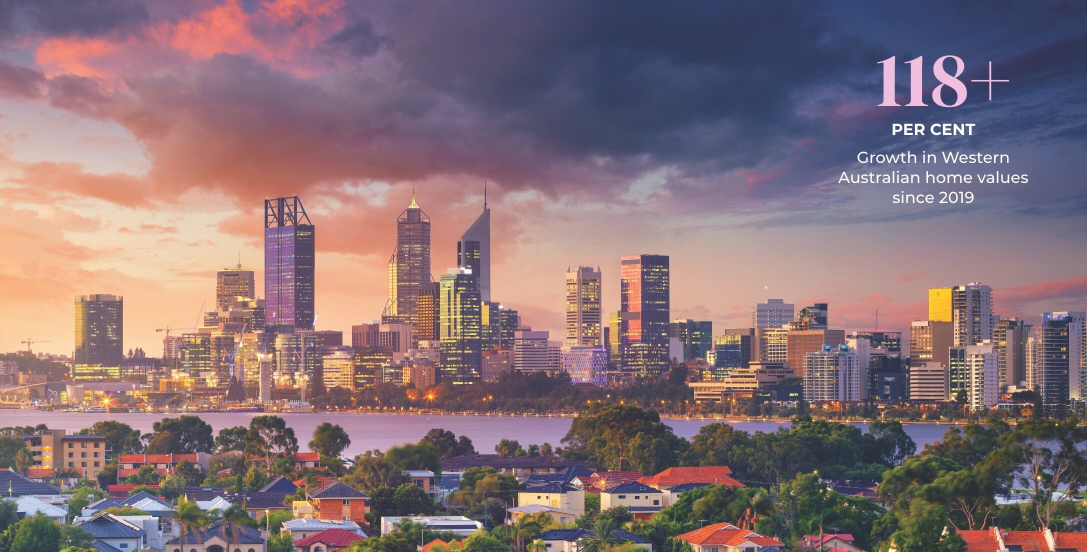
Western Australia
Western Australia’s property market is very strong and has been for several years. Home values in both city and regional areas have risen by over 118 per cent since December 2019, the strongest increase of any national market.
In the past 12 months, home prices in Perth have risen 23 per cent, underpinned by strong population growth and an insufficient supply of new homes. In regional areas, prices have also increased by more than 20 per cent over the year.
Homes are spending an average of around 9 days on the market, well below the national average.
In the rental market, vacancy rates are tight at 1.2 per cent, while advertised rents are up 7.5 per cent over the past 6-months on an annualised basis.
Yields have fallen over the past few years due to stellar home prices rises, but at 3.7 per cent investment properties are still delivering strong returns.
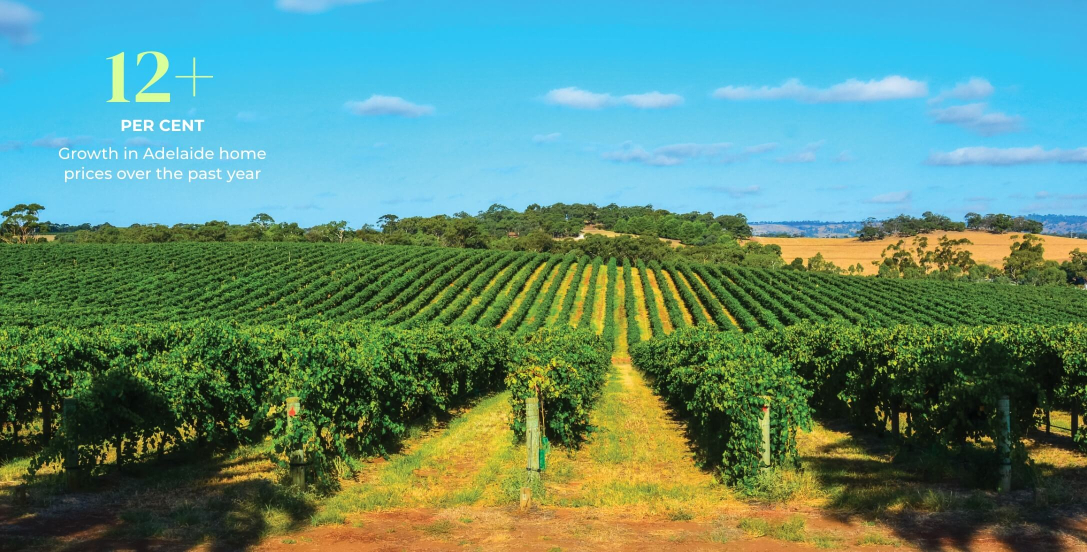
South Australia
Price growth continues to be strong and consistent in South Australia’s property market.
In Adelaide, prices are up more than 12 per cent over the past year, and values have nearly doubled since 2019.
Markets in regional South Australia have similarly in value doubled since 2019, and values up over 12 per cent year-on-year.
While there’s still plenty of activity and confidence in the market, buyers are not rushing in. Homes are selling in around 27 days, just below the national average.
Rents across Greater Adelaide are up 4.5 per cent, vacancies are sitting at just 1.1 per cent, and competition is fierce. Adelaide yields have cooled a little over the past few years, but they’re still holding strong at around 3.5 per cent, stacking up well against the national average, which is why Adelaide continues to be an attractive story for investors.

Victoria
After rebounding through parts of 2025, Victoria’s property market has levelled out again, with Melbourne homes declining 0.6 per cent in April as momentum softens.
Since December 2019, Melbourne home values have risen by just under 16 per cent, while in regional and rural Victoria, prices are up by 48 per cent.
Despite slowing price growth, the market remains active. Sales volumes in Greater Melbourne have been trending higher, and properties are selling quicker than over the past few years.
With home prices down, rental yields have improved to 3.7 per cent. This is higher than yields in Sydney, Brisbane and Adelaide, and on par with Perth. Vacancy rates on investment homes are still tight at 1.5 per cent and advertised rents are going up.
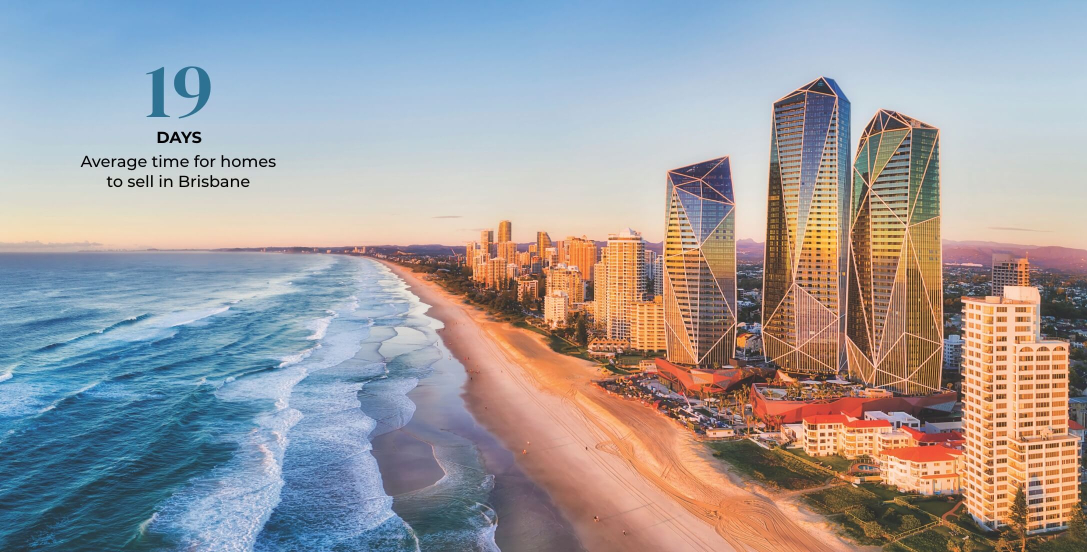
Queensland
Like the other mid-sized capitals, the Brisbane housing market has been strong and steady.
Home values have more than doubled since 2019 and are up 19 per cent over the past year. Regional Queensland markets are also making strong gains, with values up 14.7 per cent year-on-year.
Queensland’s market stands out for its high activity levels. Homes are selling in around 19 days, much faster than the national average.
Investors are still finding Brisbane attractive. Rents across Greater Brisbane are up 6.6 per cent, vacancies are sitting at 1.8 per cent and yields are at 3.3 per cent, stacking up well against national averages.
THE BOTTOM LINE
In today’s uncertain market, customers are looking for guidance. As search behaviour shifts towards AI-driven discovery, brokers who can combine clear digital visibility with strong local market knowledge will be best placed to connect with clients.