


In business, sustained success is often less about the big idea and more about continually improving the one percenters – discipline, planning, adaptability, and execution. But how do you get these right in an increasingly complex environment?
It’s a question facing many brokers who are balancing business growth with the demands of regulatory change, rising costs, and the pressure to maintain service quality.
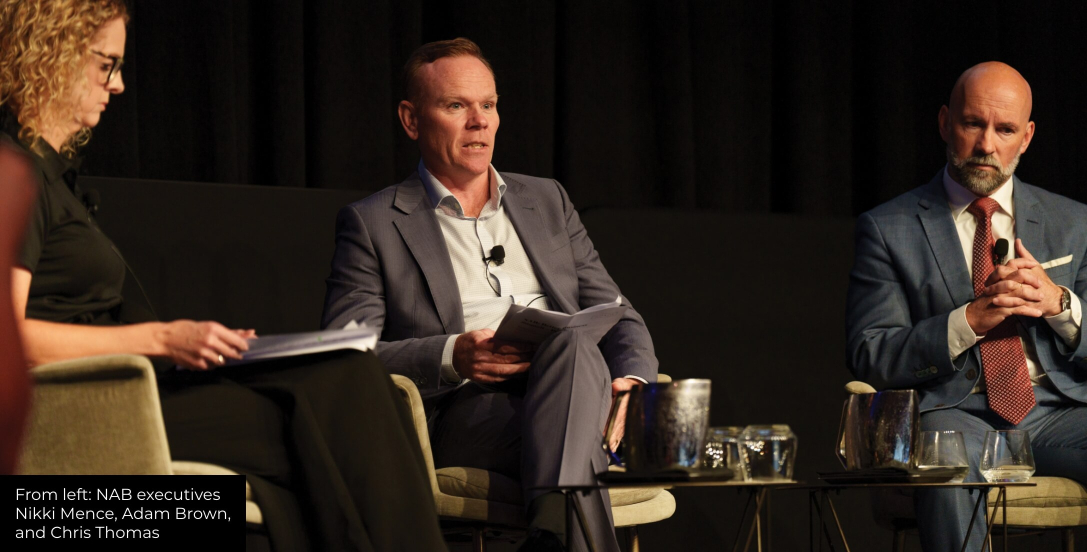
For Adam Brown, National Australia Bank (NAB) executive of broker distribution, growing a business in such a competitive market isn’t always a question of finding ways to do more.
“It’s about scaling strategically,” he says.
“This starts with identifying the right opportunities, making the most of the tools, technology and insights available, and being deliberate about where time and investment are focused.”
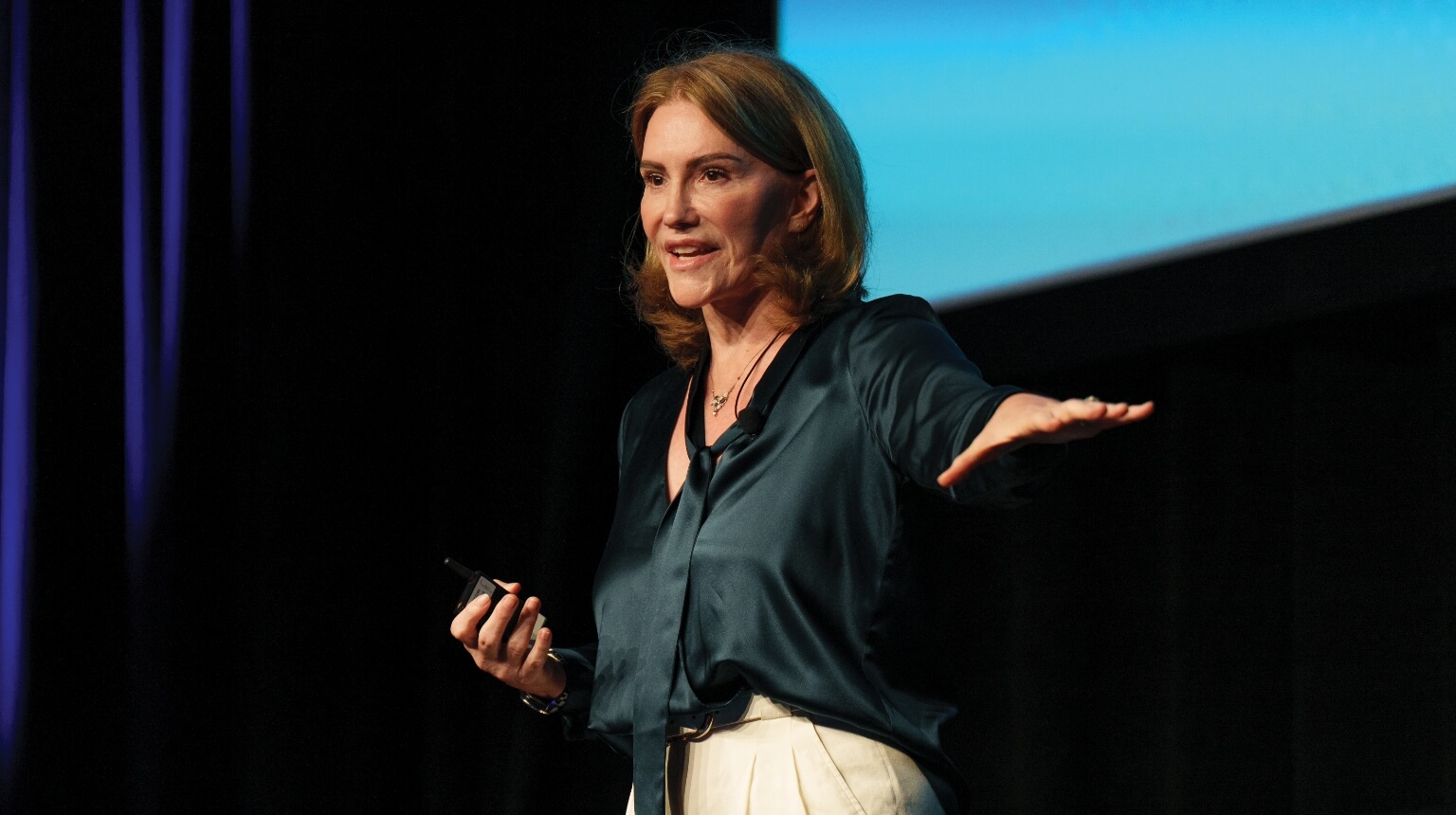
Maxine Horne is a case in point – an entrepreneur who was able to create a business out of a big idea and turn it into sustained success.
The self-made millionaire, known for her appearances on Shark Tank Australia, identified a gap in the market when she opened Fone Zone on the Gold Coast in 1995, effectively creating one of Australia’s first mobile phone retailers.
She would turn that solitary retail outlet into Vita Group and help build it to be an ASX-listed company employing more than 2,500 people and generating $875 million in revenue.
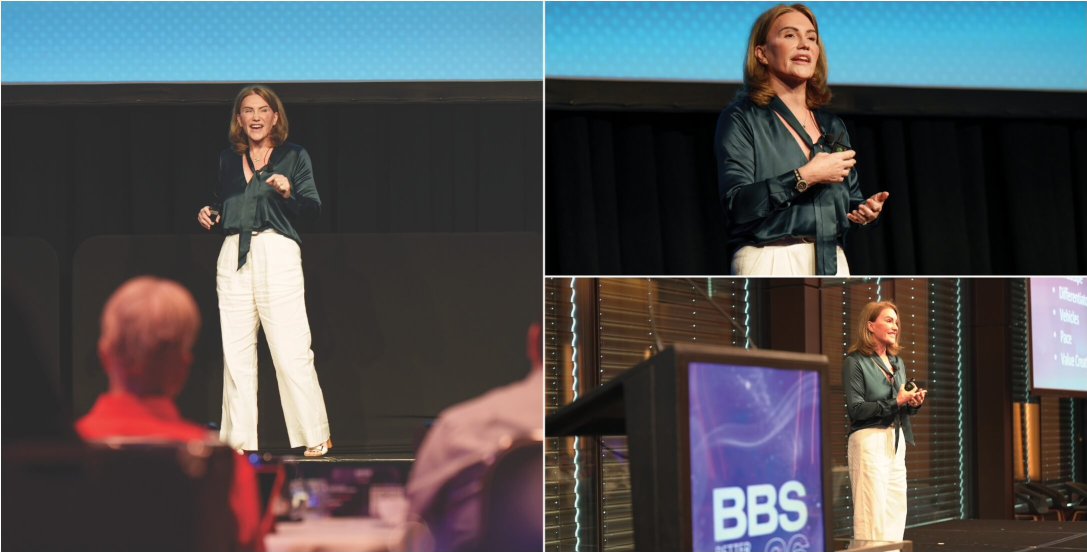
Speaking at the Better Business Summit 2026, held in partnership with NAB, Horne shared key lessons behind her success, including why the right strategy was critical.
“Everything evolves from your strategy,” Horne says.
“Once you’ve got your strategy defined, you can then work on your structure. Once that’s in place, you can recruit the right people for the right job. “Once you’ve got the skilled people on board, you can then look to implement systems.”
Horne says business owners must understand five key elements when formulating their strategy: the landscape they operate in, how they will differentiate themselves, the vehicles required to execute their plan, the pace at which they should move, and the value they aim to create.
She also encourages brokers to document it in a way their team can understand and execute.
“It doesn’t have to be War and Peace. You’ll be surprised – just by writing down your strategy, the clarity that gives you around the way forward,” she says.
“And if you’re not documenting, how can you refine and evolve and grow? You can have the best strategy in the world, but unless you execute it, it’s worthless.”
Discipline and focus
As the business evolved, Horne says she realised the leadership style that had driven its early success would not be enough to take it into the next phase.
With 20 direct reports and a young family, she recognised she could no longer do everything herself and focused on building an executive team, with the expertise and capability to lead the business through its next stage of growth.
“There comes a point when you’re scaling the business that you need to think about surrounding yourself with people that have the skills and expertise that you don’t,” she says. “It doesn’t matter how good you are. There are only 24 hours in a day.”
Finding people who were the right cultural fit was crucial.
“It’s not just about skills. You always have to think about the cultural fit you need, especially when you’re selecting leaders,” she says.
“You need them to demonstrate and live the values you would in your absence.”
Horne also attributes Vita Group’s success to a performance-driven culture, where expectations are clear and achievements are measured, rewarded, and recognised.
The entrepreneur says she wanted to create an environment where staff knew hard work and results would be acknowledged. This meant monitoring key performance indicators (KPIs) for every staff member – not just the revenue drivers.
“Every single role in your organisation should have KPIs because every role has specific tasks that are accuracy and time-based,” she says.
“And if someone says to you they don’t really have KPIs for their role, your response should be, ‘Then, why do we have that role at all?’ That changes their attitude towards KPIs.
“Word of warning though – don’t have too many KPIs. No more than five per role because you risk watering down the impact of having them.”
However, she also says it’s just as important to give staff a chance to succeed.
“There is nothing worse as an employee when your purpose is aligned with the business and you’ve got all the skills to do your job, yet your leader continues to micromanage you,” she says.
“They don’t give you autonomy, and they won’t allow you any decision-making capability.
“That gets translated to the employee thinking, ‘My leader doesn’t trust me.’ And guess what happens? They leave, and all the effort and investment you’ve put into that individual benefits another business.”
Customer-first
A business is nothing without its customers, and Horne says brokers and business owners must keep them front of mind.
She points to an initiative she led requiring customers to be acknowledged within 20 seconds of entering a store. If a sales assistant wasn’t immediately available, customers were given a voucher for a coffee and muffin at a nearby cafe.
For Horne, it was an example of a simple gesture that reinforced the customer-first culture and helped set the business apart as it scaled.
“One of the things that I found out is if you don’t care, your clients never will,” she says.
“What did this care do for us? In an environment where we had already moved into retail and our competitors were following us, it became our major differentiator.”
The importance of putting customers first is a view shared by NAB’s Brown, who says technology, including AI-enabled tools, is creating new opportunities for brokers to improve productivity and build greater capacity within their businesses.
But what brokers do with this capacity is the most important consideration.
The real value lies in how that capacity is used – giving brokers more time to support customers, building deeper relationships and staying close to customers as their needs evolve
– Adam Brown, executive for broker distribution, NAB
“The real value lies in how that capacity is used – giving brokers more time to support customers, building deeper relationships and staying close to customers as their needs evolve,” he says.
“Scaling sustainably and with confidence means growth never comes at the expense of culture or customer experience, but instead at a pace that safeguards service standards, keeps teams aligned, and ensures customers remain at the centre of every decision.”
This is why Horne says sustained success comes from consistently living the values that underpin a business, turning a big idea into something that can grow and endure.
“If you want your people to demonstrate your values, you have to as well,” she says.
“There’s a favourite saying that I use, and it’s the shadow of a leader. Never underestimate the impact that you have on your people.”