



Industry reacts to SMSF resi borrowing ban
The broking industry reacted to the federal government’s ban on new limited recourse borrowing arrangements (LRBAs) for residential property inside self-managed super funds (SMSFs), with critics saying it could remove a source of housing project funding.
Shadow housing minister Andrew Bragg hosted an industry roundtable in Canberra in July, bringing together representatives from construction, real estate, finance, non-bank lending, and the SMSF sector to discuss the impact of the ban.
Pepper Money CEO Mario Rehayem and Firstmac Group chief financial officer James Austin were among those who attended.
At the time, Bragg said industry feedback suggested the impact on housing supply could be significantly larger than Treasury estimates.
“We heard from a number of industry bodies and businesses that are involved in finance, housing, and superannuation and what is extraordinary about our meeting is that it looks like as many as 10,000 houses a year are going to be lost as a result of the government’s ban on self-managed super funds investing in property,” he said.
Bragg also said SMSF buyers were critical to helping projects meet pre-sale requirements for construction funding.
“The participants of this roundtable have found that SMSFs make up some 30 per cent of pre-sales, required for construction funding to get housing projects off the ground. They are key to unlocking housing supply,” he said.
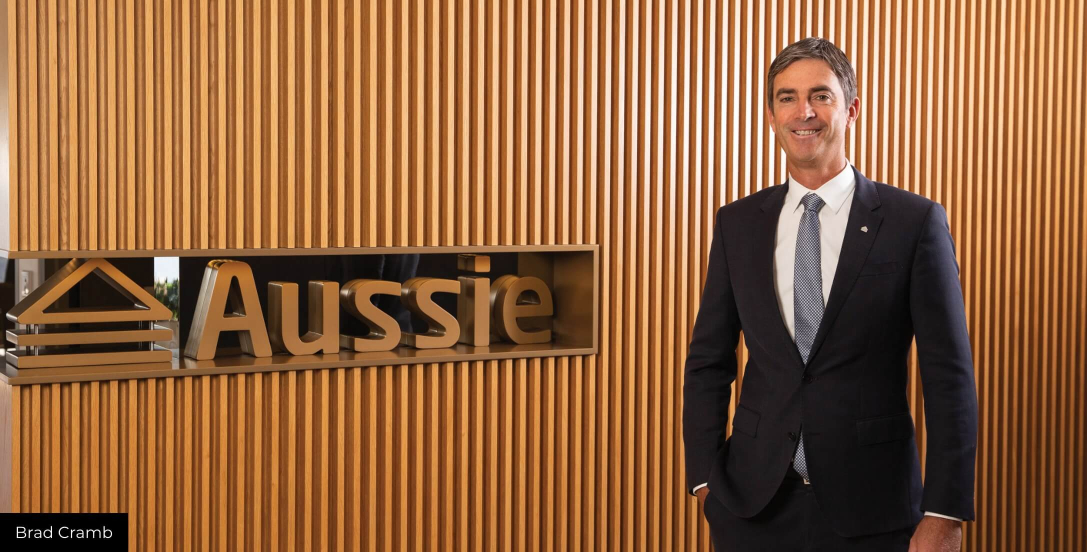
Aussie unveils new franchise model
Aussie Home Loans revealed plans for a new franchise pathway, Aussie Modular, introducing a banded trail structure providing up to 90 per cent pass-through on self-generated business.
The lender said Modular would operate alongside its three existing franchise models as a fourth option designed for operators focused on building their own businesses.
Aussie said the model recognises sustainable, self-driven growth while continuing to support brokers in developing long-term businesses.
Brad Cramb, CEO of distribution at Aussie, said the initiative reflected the group’s ongoing evolution.
“It’s just been a story of constant evolution. We’re always looking to find new ways to create value for customers, for brokers, and ultimately for the industry,” he said.
“This next phase with modular is not just about category growth, this is about differentiation and how brokers can build businesses that stand out in what is becoming a cluttered marketplace for broking.”
Cramb said that following the rollout of Find, Buy, Own and AI capabilities, Modular was designed to bring those developments together into a broader commercial offering.
“What modular is, is the capstone to that. This is about bringing that broader evolution together with something that’s commercially meaningful for business owners,” he said.

New FBAA CEO outlines top priorities
Finance Brokers Association of Australia (FBAA) CEO Leo Gagic outlined his priorities in his first interview with The Adviser in July, with a focus on operational simplification, broker engagement, education, and compliance support.
Gagic, who brings extensive financial services experience, said he was in an “extensive discovery phase” involving direct engagement with members and a review of the association’s internal processes.
The new association chief said his goal was to continue evolving the FBAA into a streamlined organisation that delivers effective education, support, and value for broker members.
“My bread and butter background has been in financial services and transformation. Over nearly 40 years, I’ve worked all the way from credit risk to consumer loans, underwriting, settlements, and working with brokers,” he said.
“I’ve used brokers multiple times personally and, at Liberty Finance, I ran their operations as chief operations officer, where I was embedded with the whole broker network…
“But in every role, I learned that it’s always good to learn from a closed-loop feedback process; listening to customers about their needs and passing it back up the line. It’s really no different here. At the FBAA, the member base is my customer, so I see a strong alignment in terms of my skill and background for this new chapter.”

Government raises Help to Buy income limits for FY27
The federal government’s Help to Buy scheme increased its income thresholds for the financial year 2027, expanding access to the shared equity home ownership program.
Income caps have risen to $103,000 for single applicants and $165,000 for joint applicants and single parents, up from $100,000 and $160,000, respectively. A further 10,000 places will be made available across all states and territories for FY26–27 following the start of the new financial year.
Administered by Housing Australia, the scheme allows eligible buyers to secure a mortgage with a deposit of at least 2 per cent, with the Australian government contributing up to 40 per cent of the purchase price for new homes and up to 30 per cent for existing homes.
Since launching, Help to Buy has received more than 7,200 applications, with 4,800 applicants having either settled or found a property to purchase.
Housing Australia CEO Scott Langford said the scheme was making a meaningful difference.
“The changes from 1 July ensure we can continue to support more Australians into home ownership, and we look forward to working with participating lenders to provide housing stability for individuals, families and communities; now, and into the future,” he said.