





A word from Millbrook Group
A development can take months or years from acquisition through construction, completion, and sale. The funding strategy needs to account for that entire journey.
At Millbrook, we look at the construction facility and the potential residual stock funding upfront. That means we’re thinking about what happens after construction, not just how we get the project out of the ground.
For the borrower, that can create greater certainty and potentially avoid the cost and disruption of having to find a completely new lender at a critical point in the project.
We want to understand where the client is going, not just where they are today.
Australia’s construction sector has faced mounting pressures in recent months, with rising costs weighing on developers and builders.
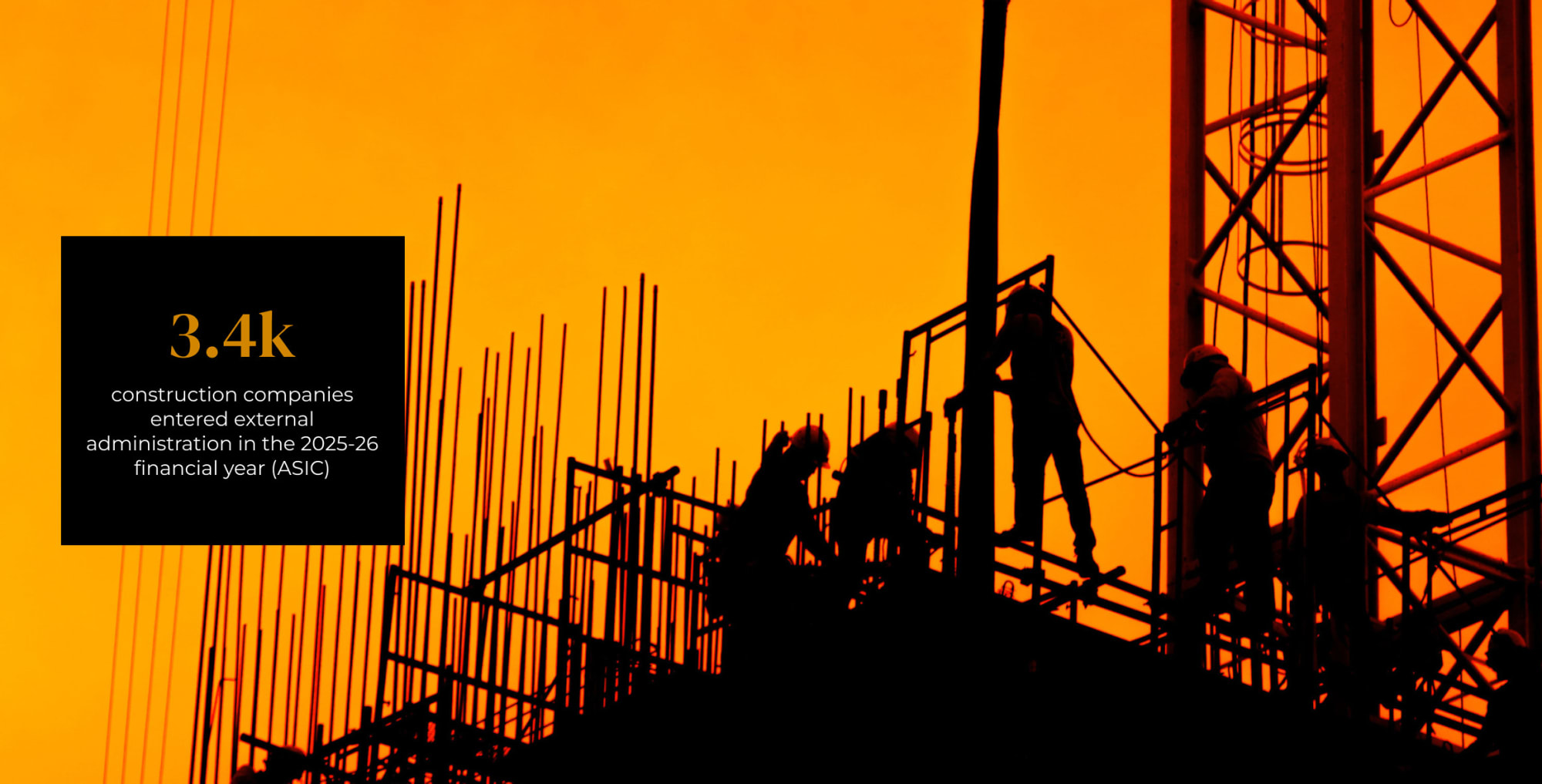
House construction prices rose 5.9 per cent over the financial year to June 2026, according to the Australian Bureau of Statistics (ABS), while Australian Securities and Investments Commission (ASIC) data shows 3,435 construction companies entered external administration during the same period.
For brokers and borrowers, the pressures facing the sector highlight the importance of managing finance in a way that supports a project throughout the construction life cycle, particularly when circumstances change.
George Lyall, general manager at Millbrook Group, says the lender’s experience in construction lending has shown the value of flexibility, speed, certainty, and strong relationships.
“Construction finance isn’t a transaction you can simply approve and walk away from. There are a lot of moving parts, and things don’t always go exactly to plan,” he says.
“Our approach is deliberately hands-on. We meet our clients, understand the project and the local market, maintain direct access to our credit team, and stay involved throughout the build.
“That includes getting out on site and seeing what’s actually happening. We believe you make better lending decisions when you understand the project on the ground, not just what’s written in a credit paper.
“Most importantly, our clients know who they’re dealing with. We don’t believe in creating layers between the borrower, broker, and people making the decisions.”
Beyond the first draw
One of the key ways construction finance differs from a traditional loan is the need to account for the risks and funding requirements that can emerge throughout the project life cycle.
Usman Naeem, director and broker at Melbourne-based Calibre Finance & Advisory, says brokers who work in this space need to understand the capital stack, the hierarchical structure of the debt and equity used to finance the project, when assessing a deal.
“As a broker, you need to manage the process from end to end – engaging the right lender, valuer, and quantity surveyor early, making sure the builder has the capability and track record to deliver, and, importantly, having a clear and realistic exit strategy from day one,” he says.
“The biggest mistake is treating the construction facility as a standalone piece of the transaction.
“You need to understand how all the components fit together and what the project will need from acquisition through to completion.”
A lender’s ability to assess and structure construction risk is also important, according to Naeem.
“Things inevitably change during a build. Costs move, timelines shift, and variations arise,” he says.
“When that happens, you want a lender that understands the context and can make a considered commercial decision rather than simply defaulting to a rigid policy response.
“The right lender can help identify issues early and work with the broker and borrower to find a practical solution.”
Naeem also says certainty of execution matters more than pricing.
“For me, that means knowing the lender has the capital, the credit appetite, and the experience to support the particular asset and borrower,” he says.
“I want transparency around the key parameters – LVR, LTC, presales, equity requirements, and the drawdown process – so there are no surprises once the project gets underway.
“I also want to know who is actually making the credit decision and who will be managing the facility after settlement.
“A competitive rate doesn’t mean much if the funding process becomes difficult when the project is underway.”
Millbrook’s Lyall makes a similar point.
“Brokers should look at the lender’s track record, longevity, funding structure, capital base, and ability to continue meeting construction claims throughout the project,” he says.
“They should also ask how involved the lender is once the facility has settled. Does the lender understand the project? Have they properly assessed the feasibility, the borrower, the builder, and the exit strategy? Are the people who approved the deal accessible if something changes?
“Construction finance is a long relationship. The lender needs to be capable of supporting the project when things are going well, but also when something doesn’t go according to plan.
“That’s where the quality of the lender really gets tested.”
The entire life cycle
Lyall says a lender’s experience tends to make the biggest difference at the beginning.
“The early decisions around equity, liquidity, construction costs, and funding structure can have a major impact on the rest of the project,” he says.
“We often see borrowers focus heavily on getting the land settled without fully understanding the capital they’ll need to contribute once construction begins.”
For us, it’s about more than providing finance. It’s about understanding the project, staying close to it, and working with the people involved to give it the best possible chance of reaching completion
– George Lyall, general manager, Millbrook Group
The project also has to stack up commercially, according to Lyall.
“We’re not interested in financing a project simply because the security looks good.
“We need to understand the feasibility, the margin, the costs, and the exit. In the current environment, realistic feasibility assumptions and adequate borrower equity are more important than ever.”
Brokers also play an important role in ensuring the fundamentals of a project are properly assessed before finance is put in place.
For Lyall, this includes accurately assessing construction costs and contingencies, council fees, approvals, and professional costs, as well as the borrower’s equity and available cash reserves. Brokers should also consider the intended exit strategy and whether any additional funding will be required through to completion.
“Perhaps most importantly, be upfront with the lender,” Lyall says.
“If there is an issue, we’d much rather know about it early. Good lenders and good brokers should be working together to identify problems before they become urgent.”
Lyall cites a recent project financed by Millbrook involving a luxury property in Toorak, Victoria.
As the project approached completion, the development encountered unforeseen additional costs. Rather than simply viewing the issue as a problem with the original facility, Millbrook worked with the client to understand what was required to get the project completed.
Millbrook also provided an additional cost-overrun facility outside the original approval, allowing the client to complete the property.
“For me, that’s a good example of why the relationship with the lender matters,” he says.
“The original credit approval is important, but so is having a lender that remains engaged when circumstances change.
“Flexibility doesn’t mean compromising discipline. It means understanding the situation, assessing the risk and finding a commercially sensible solution where appropriate.”
Lyall says that in an uncertain market, the lender’s ability to support a project through changing circumstances is just as important as the loan structure itself.
“Brokers and borrowers need confidence that their lender has the capital, experience, and willingness to support the project through the entire journey – not just get it approved and move on,” he says.
“At Millbrook, we want to be a lender that brokers can pick up the phone to, borrowers can speak to directly, and projects can rely on throughout the life cycle.
“For us, it’s about more than providing finance. It’s about understanding the project, staying close to it, and working with the people involved to give it the best possible chance of reaching completion.”